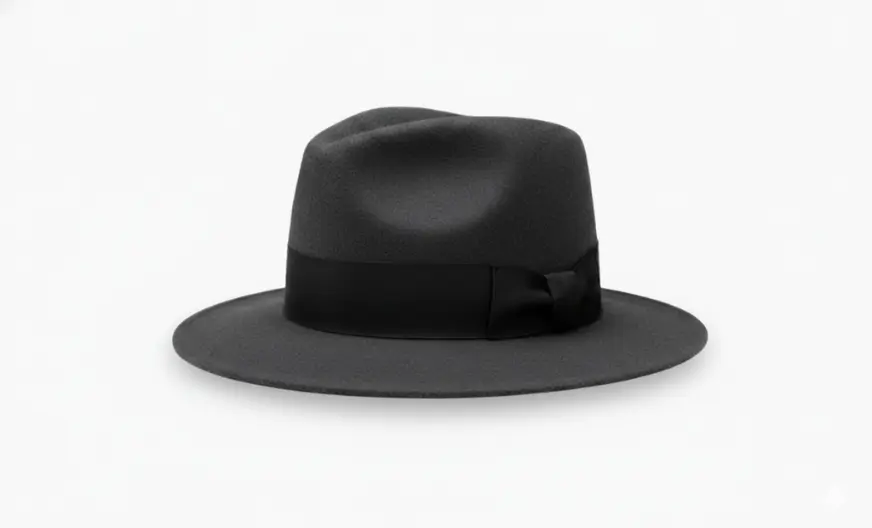
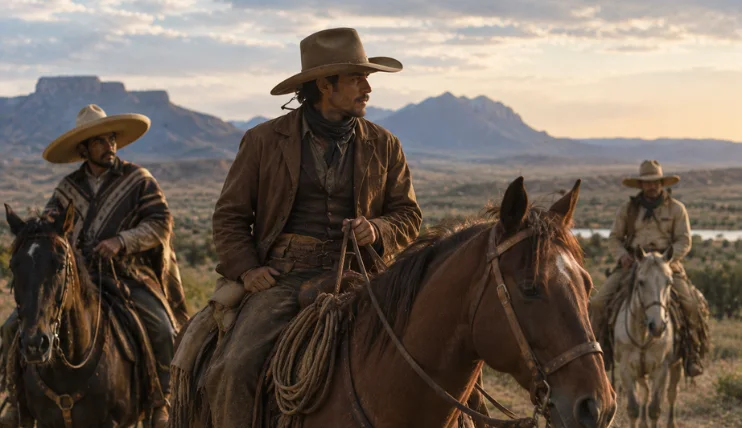
The cowboy hat didn’t come from one person or one design. Its roots go back to Spanish and Mexican riding traditions, especially the wide-brimmed hats that vaqueros wore while working with horses and cattle.
As cattle ranching spread across the American West during the 1800s, cowboys wore different kinds of hats and shaped them to suit their work and the places they lived.
John B. Stetson’s Boss of the Plains was an important step in the development of the modern cowboy hat. Later, rodeo, Hollywood, television, country music, and fashion helped turn the cowboy hat into a well-known symbol of the American West.
Before the 1800s: Western Hat Traditions
Before American cowboys came along, Spanish and Mexican vaqueros were already working cattle on horseback. They wore wide-brimmed hats as part of their everyday gear. American cowboys later picked up many of these riding and ranching traditions.
Spanish Riding and Cattle-Working Traditions
Wide-brimmed hats were already part of Spanish and Mexican life before the American cowboy became known. PBS explains that the wide-brimmed hat and other parts of cowboy clothing came from these traditions.
The wide brim had a practical use. It helped keep the sun off the wearer and gave some cover from the rain during long cattle drives.
So, the wide brim wasn’t something American cowboys came up with. Spanish and Mexican riders were using it long before it became linked with the American cowboy.
The Mexican Vaquero and Charro Tradition
The Smithsonian describes vaquero as the Spanish term for cowboy. The charro is part of Mexico’s cowboy and rodeo traditions, with a broad sombrero and matching outfit.
The National Cowboy & Western Heritage Museum traces the cowboy hat’s development from woven sombreros to the hats known as “John B.’s” or “Stetson’s”.
The 1860s: John B. Stetson and the Boss of the Plains
The 1860s brought a new design into the cowboy hat’s history. This was when John B. Stetson introduced the Boss of the Plains.
Who Was John B. Stetson?
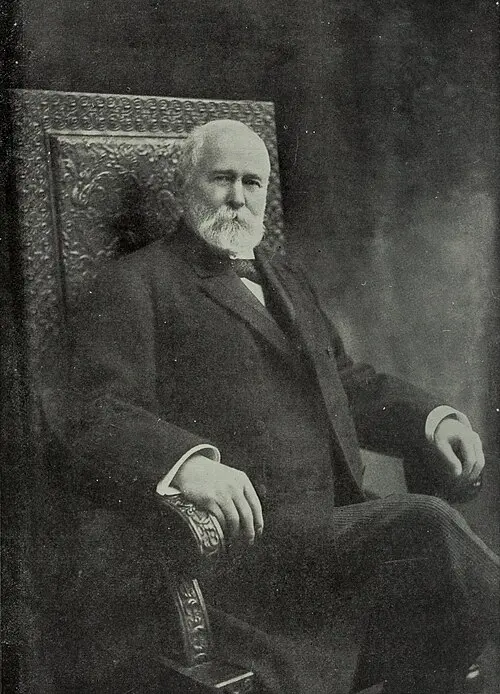
John Batterson Stetson was an American hat maker. His father was a hat maker too, so he learned the trade before heading West as a young man. In 1865, he returned to Philadelphia and started his own hat-making business.
When Was the Boss of the Plains Introduced?
John B. Stetson created the Boss of the Plains in 1865. It had a wide, flat brim and a smooth, round crown. The hat was made from fine fur felt, including beaver, rabbit, and other small animals.
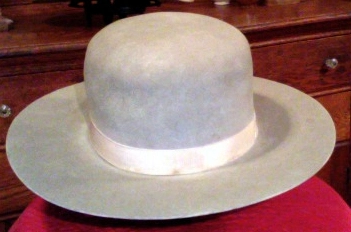
Unlike many cowboy hats today, the original design had no turned-up brim or pinched crown. Cowboys later changed the shape of their hats to make them more useful for their work.
Did Stetson Invent the Cowboy Hat?
No, John B. Stetson didn’t invent the cowboy hat. People in the West were already wearing wide-brimmed hats before he made the Boss of the Plains.
Vaqueros and other cattle workers had their own hat styles too. Stetson made the Boss of the Plains, which became one of the designs that helped shape the cowboy hat we know today.
The 1870s–1890s: Cowboys Shape the Hat
After the Boss of the Plains came along, cowboys began changing their hats to suit the way they worked. They shaped the crowns and brims in different ways, and this helped bring about the cowboy hat styles we see today.
Real Cowboys and Their Hats
Early Texas cowboys often wore Spanish sombreros, also called poblanos. These hats had flat crowns and wide, flat brims.
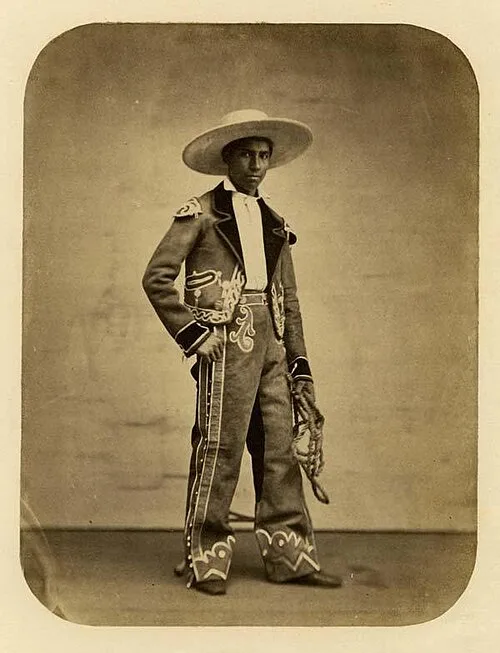
Mexican sombreros had even wider brims and tall, cone-shaped crowns, but they were too big and heavy for ranch work.
Some cowboys couldn’t afford more expensive sombreros, so they wore simple felt hats with soft, floppy brims. Richard W. Slatta of North Carolina State University explains this in his article about cowboy hats. He also mentions an 1874 account in which a journalist described cowboys wearing wide-brimmed felt hats and, at times, Mexican sombreros.
Cowboys needed hats that kept the sun and rain off their heads and held their shape while they worked. The Kansas Historical Society explains that cowboys on cattle trails wore different kinds of hats, depending on what worked for them.
How Cowboys Shaped Their Hats
Cowboys changed their hats to make them easier to use on the job. Some pinched the crowns so they could get a better grip on their hats, as the Kansas Historical Society explains in its cattle trail glossary.
Some also pinned the front of the brim back to keep it out of their eyes. Toward the end of the cattle-drive era, rolled brims began appearing to keep the brim out of the way of the lariat, or rope used to catch cattle. The glossary describes these changes too.
Cowboys also creased their hats and added different hatbands. Some crease styles had names, including the Cattleman, Montana, and centerfire. Slatta lists these crease names in his article.
Black Cowboys in the Old West
Black cowboys worked on ranches and cattle drives alongside other cowboys. They were part of the Old West, too.
According to the Library of Congress, historians estimate that around 6,000 to 9,000 of the estimated 35,000 cowboys in the American West were Black.
One well-known Black cowboy was Willie M. “Bill” Pickett, a Texas cowboy and rodeo performer known for bulldogging. He was inducted into the National Rodeo Hall of Fame in 1972.
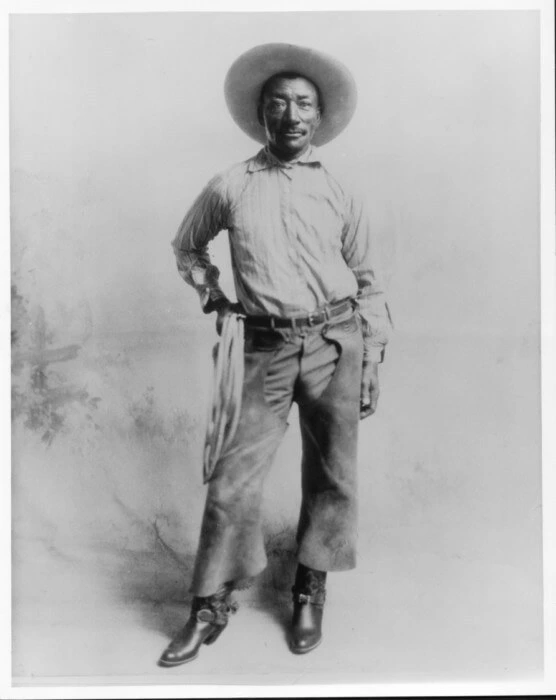
This photo shows a Black man wearing a cowboy hat, but it doesn’t identify the exact hat style.
The Early 1900s: Cowboy Hats in Rodeo and Western Life
Black cowboys worked on ranches and cattle drives in the late 1800s. By the early 1900s, cowboy hats were also a familiar sight at rodeos and Western shows.
Cowboy Hats in Rodeo
In the early 1900s, rodeos gave cowboys a chance to show their riding skills in front of crowds. Riders took part in events such as bronc riding and steer riding.
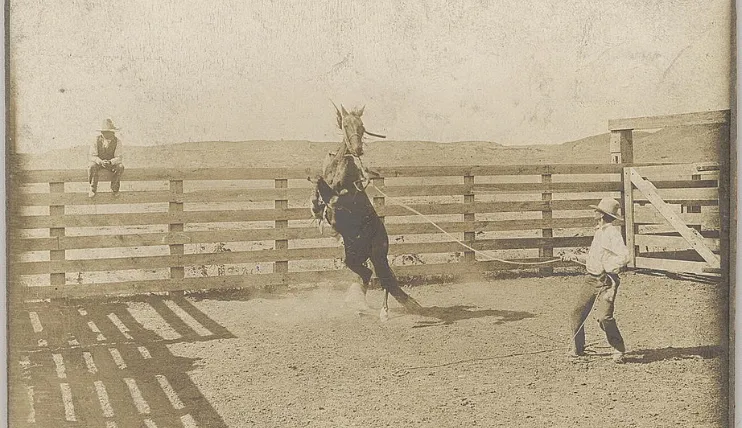
According to the National Cowboy & Western Heritage Museum, early bronc riders sometimes used their hats to fan their horses during competitions.
Cowboy hats were also part of what riders wore in the arena. Old rodeo photos show cowboys wearing hats while taking part in these events. Rodeos gave the public a chance to see cowboy hats as part of cowboy life and Western entertainment.
Women and Cowboy Hats
In the early 1900s, women took part in rodeos as trick riders and bronc riders. They wore cowboy hats as part of their riding outfits.
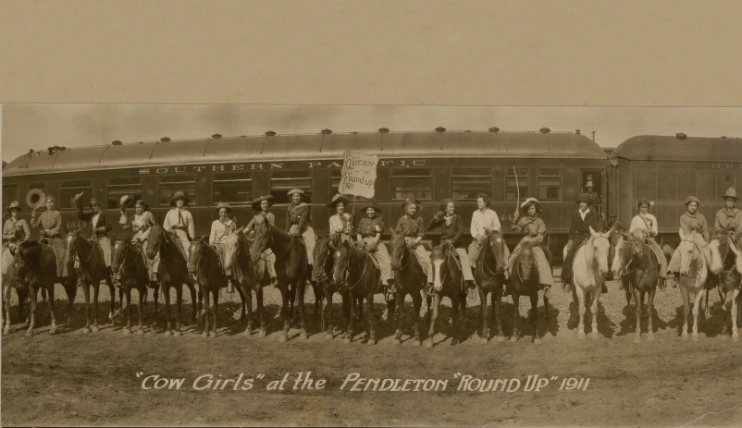
At the 1924 Cheyenne Frontier Days, cowgirls wore large, peaked ten-gallon hats with riding skirts, jodhpur pants, neckerchiefs, and boots. The National Cowboy & Western Heritage Museum’s historical account of cowgirls describes these outfits and shows how women wore cowboy hats in rodeo competitions.
The museum also explains that the 1922 Madison Square Garden rodeo influenced cowgirl fashion. Within two years, similar jodhpur pants had become standard clothing for cowgirl trick and bronc riders.
The 1910s–1920s: Hollywood and the Cowboy Hat
Cowboy hats were already part of rodeos. Then, in the 1910s, they started showing up in Western movies too.
Silent Western Films
In the 1910s and 1920s, Western movies helped make the large cowboy hat familiar to movie audiences.
Tom Mix was one of the biggest cowboy stars of the silent-film era. His huge ten-gallon Stetson became his trademark.
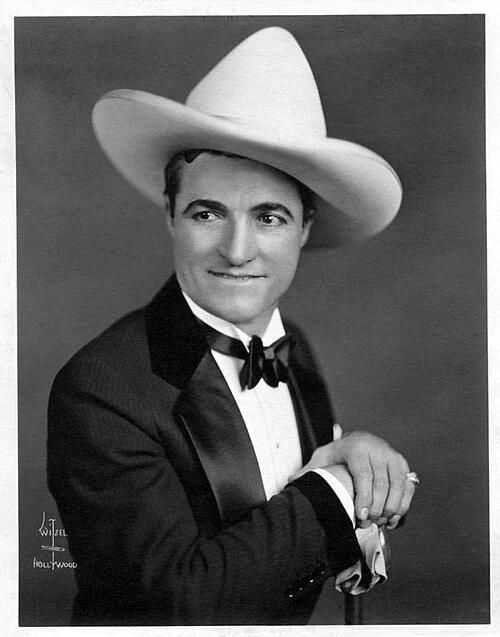
The way Mix looked in movies was different from the everyday cowboy look. The Smithsonian’s Tom Mix-style Stetson dates from 1910 to 1930. It’s made of off-white felt with a matching ribbon band, and it measures 7 inches high and 14 inches wide.
The 10-Gallon Hat and the Cowboy Image
The name “ten-gallon hat” doesn’t mean the hat could hold ten gallons of water. The Smithsonian Lemelson Center explains that the name’s origin is uncertain.
One possible explanation links the name to the Spanish word galón, meaning hatbands. Mexican vaqueros sometimes wore sombreros with enough hatbands for people to describe them as holding ten galones.
This is only one possible explanation, not a confirmed origin. The exact history of the name is still uncertain.
The 1930s–1960s: The Cowboy Hat Becomes an American Icon
By the 1930s, more people were seeing cowboy hats in movies. Soon, television brought them into American homes as well.
Cowboy Hats in Popular Western Movies
Western movies helped bring cowboy hats to more people. In the 1930s, Gene Autry helped set a fashion trend for singing cowboys and country performers.
According to Gene Autry’s official website, his hats were white with a double crease on the crown, and Stetson was his favorite hat brand.
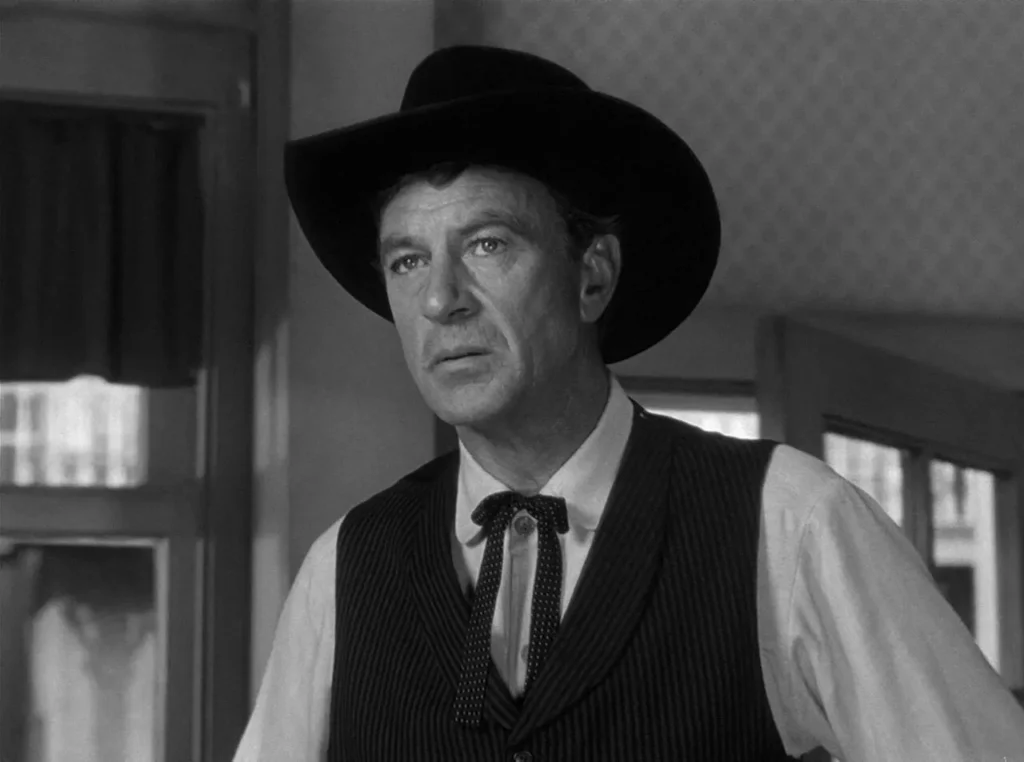
Western films continued to feature cowboy hats in later decades. In High Noon (1952), Gary Cooper wore a wide-brimmed cowboy hat as Marshal Will Kane.
John Wayne wore different cowboy hats in his Western films. In The Man Who Shot Liberty Valance (1962), he wore a light grey Stetson with a high, forward-sloping crown.
In McLintock! (1963) and The War Wagon (1967), he wore a tan Cattleman-style hat with a curled brim and chin strap, as shown on John Wayne Enterprises’ official website.
Television Westerns also had their own well-known cowboy hats. Dale Robertson wore a black Resistol cowboy hat with an indented crown, upturned brim, and silver hatband as Jim Hardie in Tales of Wells Fargo (1957–1962). You can see it in the Autry Museum’s collection.
The 1970s–1990s: Cowboy Hats Enter Music and Fashion
By the 1970s, cowboy hats were showing up more in country music and fashion, not just in Western movies and TV shows.
Cowboy Hats in Country Music
In 1981, George Strait began his country music career with a traditional cowboy look. He wore Resistol cowboy hats with starched blue jeans and pearl-snap shirts.
When his record company suggested he stop wearing a cowboy hat, Strait refused and kept it as part of his stage look. He later worked with Resistol to create his own hat line, as explained on Resistol’s George Strait page.
Clint Black also wore cowboy hats onstage. He wore custom-made black felt hats from Standard Hat Works in Waco, Texas.
One of his hats, shown by the Country Music Hall of Fame and Museum, has the title of his 1989 hit Killin’ Time stamped inside the lining.
Both singers helped keep cowboy hats a familiar in country music during the 1980s and 1990s.
Cowboy Hats Become Fashion
In 1980, the movie Urban Cowboy brought cowboy fashion back into style. John Travolta wore cowboy hats, jeans, boots, and big belt buckles in the film.
After the movie came out, more people started wearing Western clothes, even if they had never worked on a ranch. Cowboy hats became part of everyday fashion, not just cowboy workwear, as Wide Open Country explains.
The 2000s to Today: Cowboy Hats in Modern Life
Today, cowboy hats are still worn on ranches and at rodeos. Country singers and people who enjoy Western fashion wear them for their own reasons, too.
Cowboy Hats on Ranches and at Work
Cowboy hats are still part of ranch life. Ranchers wear them while riding horses, moving cattle, and working outside for hours.
Cowboy hats are also seen in movies, music, and fashion, but many ranchers still wear them as part of their daily work.
For ranchers, a hat needs to fit well, stay on while riding, and hold up to daily use. In that way, cowboy hats are still part of ranch work, just as they were in the past.
Cowboy Hats in Modern Rodeo
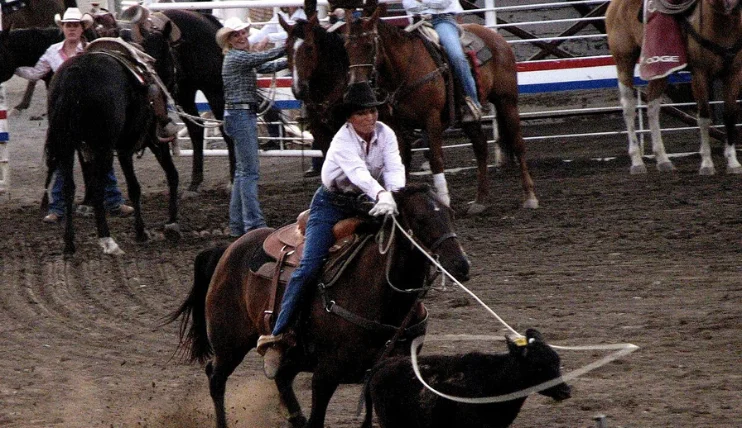
Cowboy hats are still part of the traditional cowboy look in modern rodeo. Rodeo riders and competitors often wear them with their Western outfits. In rodeo, hats aren’t just about style. They’re also part of Western tradition.
Competitors, announcers, and other people taking part in rodeos commonly wear cowboy hats. They help keep the traditional cowboy look alive as rodeo continues as a modern sport.
Cowboy Hats as Fashion
Cowboy hats have also found a place in high fashion. In January 2024, Pharrell Williams included cowboy hats and Western-style clothing in Louis Vuitton’s men’s collection at Paris Fashion Week, as reported by ABC News.
This is one example of cowboy hats showing up in designer fashion, beyond ranches and rodeos.
How Cowboy Hat Styles Developed
Cowboy hats changed over time as hat makers developed new styles. One early design that helped shape the cowboy hat was the Boss of the Plains.
The Boss of the Plains: The First Modern Cowboy Hat
John B. Stetson introduced the Boss of the Plains in 1865. He made it for people working outdoors in the American West. Its simple shape helped set the look of the modern cowboy hat.
The Rise of the Cattleman Style
The Cattleman style developed in the late 1800s among cattle workers in the American West, as described by Bernard Hats. It later became a widely worn cowboy hat style.
The Development of Other Cowboy Hat Styles
Cowboy hats changed over time, and new styles came along. The Open Crown had no crease in the top. By the 1880s, the Montana Peak had become a popular choice in the West, as History Cooperative explains.
Stetson later introduced the Carlsbad, which became a common cowboy hat during the 1900s. Tom Mix and John Wayne both wore this style.
The Gus, Pinch Front, and Gambler are other cowboy hat styles, but their exact dates of origin are not clear.
If you want to learn more about each style, see our guide to different types of cowboy hats.
What Are Cowboy Hats Made Of?
Most cowboy hats are made from felt or straw. Some are made from leather, too.
Felt hats are made from wool or animal fur, like rabbit or beaver. Straw hats are made from woven straw or paper fibers. Leather hats are made from animal hide.
Felt hats are often worn in cooler weather. Straw hats are lighter and let air through, so people often wear them on hot days.
If you want to know more about the different materials and how these hats are made, see our guide to cowboy hat materials.
Frequently Asked Questions About Cowboy Hat History
What Was the Original Purpose of a Cowboy Hat?
Cowboy hats were originally worn to protect people working outdoors from the sun and rain. The wide brim kept the sun off the face and neck and helped keep rain away. The high crown gave the head some insulation in cold weather.
Who Really Invented the Cowboy Hat?
There is no single known inventor of the cowboy hat. It developed over time as cowboys and vaqueros wore and changed different hat styles to suit their work.
When Was the Modern Cowboy Hat Invented?
The modern cowboy hat was introduced in 1865, when John B. Stetson brought out the Boss of the Plains. Cowboys and vaqueros were already wearing wide-brimmed hats before that, but Stetson’s design helped shape the cowboy hat we know today.
Who Wore Cowboy Hats First, Mexicans or Americans?
Mexican vaqueros wore wide-brimmed hats before the American cowboy tradition developed. Their hats and ways of working with cattle and horses later helped shape the cowboy traditions of the American West.
When Did Cowboy Hats Become Popular?
Cowboy hats became popular in the American West during the late 1800s. John B. Stetson’s Boss of the Plains helped make them popular among cowboys and ranchers.