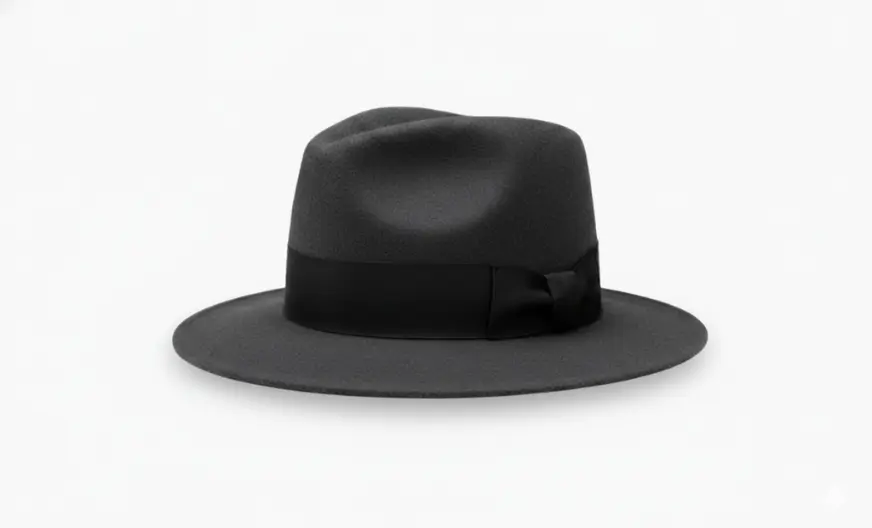
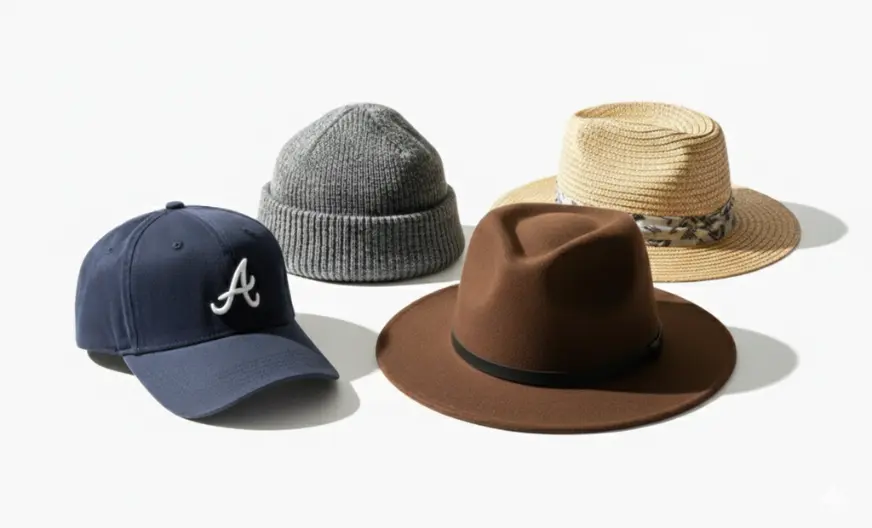
A hat is a type of headwear you wear on your head. It has a crown that covers your head and may have a brim that sticks out around it to provide shade and protection.
A cap is a type of hat too, but it usually has a short visor or bill instead of a brim that goes around the hat.
Why Do People Wear Hats?
People wear hats for a few simple reasons. It’s usually not complicated.
The most common reason is protection. Hats block sunlight, keep rain off your face, and help retain heat in cold weather. That’s why you see sun hats in summer and wool hats in winter.
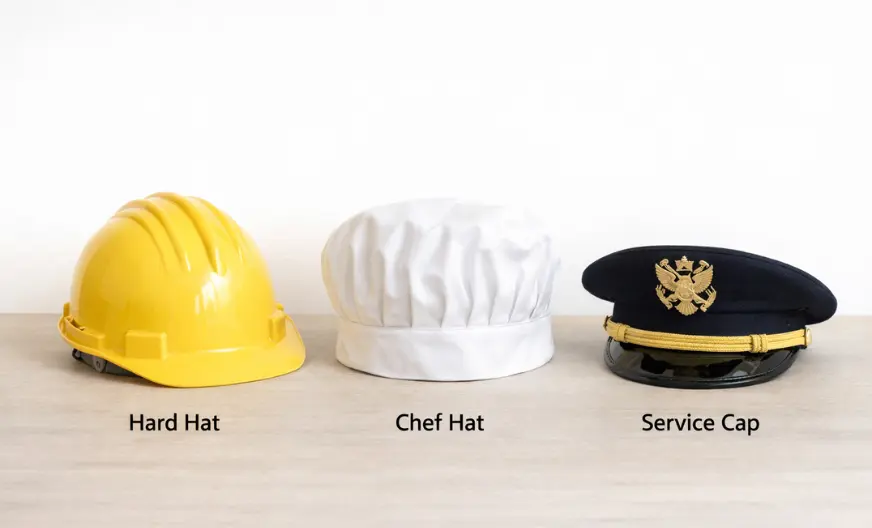
Another reason is work and safety. Some jobs require hats to protect the head or meet uniform rules. Hard hats, chef hats, and service caps exist for a reason. They are not fashion items first. They are tools.
Style is also a big reason. Many people wear hats because they like how they look. A hat can finish an outfit, hide a bad hair day, or help someone feel more confident. This is especially true for casual caps and fashion hats.
Tradition and culture matter too. In many places, hats are worn for religious events, ceremonies, or as part of traditional clothing. In these cases, the hat represents identity, respect, or status.
Most of the time, people wear hats for more than one reason. A hat can be practical and stylish at the same time. The reason depends on the person, the weather, and the situation.
Common Types of Hats
Hats come in many shapes, and each one is made for a reason. Let’s go through the most common hats so you can see what they’re for and when to wear them.
Everyday Hats
These are the hats people wear most often, just for daily life.
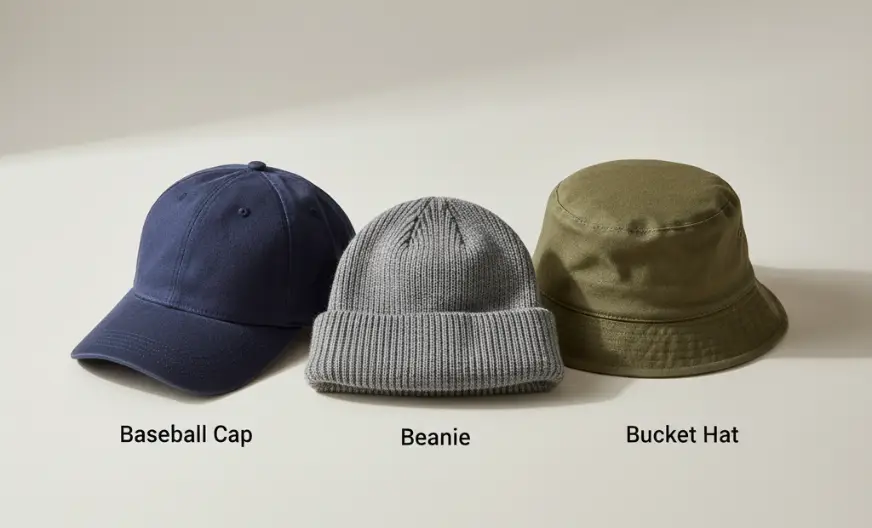
Baseball Cap
A baseball cap has a soft crown and a curved brim. It’s usually made from cotton or polyester. People wear it to keep the sun out of their eyes, for comfort, or just because it looks good with casual clothes.
We’ve seen this type of hat everywhere, from kids playing sports to adults running errands. You can learn about the history of baseball caps and how they became popular in our detailed article on their evolution.
Beanie
Beanies are tight-fitting knitted hats that keep your head and ears warm in cold weather. They are simple, comfortable, and often worn with casual or winter clothing.
Bucket Hat
Bucket hats are another everyday option. They have a soft crown and a brim that slopes downward all around.
They’re great for sun protection, and we like to recommend them for casual outdoor activities. They aren’t flashy, but they do the job. We’ve explained what a bucket hat is and why people wear it in detail in a separate guide.
Weather Hats
These hats are mainly for protection against the sun, rain, or cold.
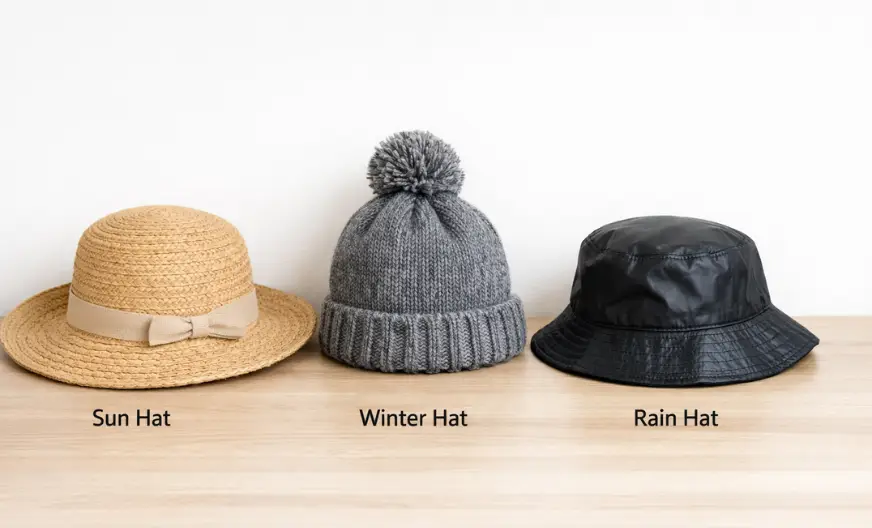
Sun Hat
Sun hats have wide brims that cover the face, ears, and neck. They are made from light, breathable materials like straw or cotton and are worn during outdoor activities such as gardening, hiking, or just spending time in the sun.
Winter Hat
Winter hats are thicker and warmer, often made of wool or fleece, and they keep heat in, covering your ears to prevent cold.
Rain Hat
Rain hats are made from waterproof or water-resistant materials, keeping your head dry in wet weather, and they usually have a small brim to guide water away from the face.
Work and Safety Hats
These hats are worn because the job or activity requires them.
Hard Hat
Hard hats are rigid helmets that protect the head from impact and are worn on construction sites, in factories, or in other dangerous workplaces. In some cases, their colors show a person’s role or rank.
Chef Hat
Chef hats are tall, white hats used in professional kitchens. They help keep hair out of food and also indicate rank or expertise among kitchen staff.
Service Cap
Service caps are part of uniforms for police, military, or transport workers. They are structured hats that signal authority and are designed to be easily recognizable.
Traditional and Formal Hats
These hats are for ceremonies, culture, or dressing up.
Fedora
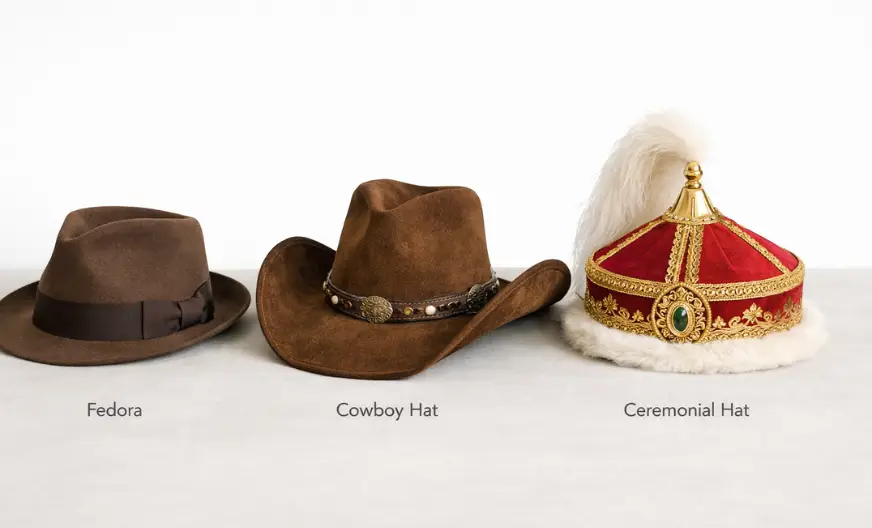
Fedoras have soft, structured crowns and medium brims and are commonly worn in formal or semi-formal outfits. We’ve covered what a fedora hat is and when it actually makes sense to wear one in a separate guide.
Cowboy Hat
Cowboy hats have wide brims and high crowns. They are traditional in Western culture and help protect from the sun while also reflecting regional style. If you’ve never worn one before, you can see how to wear a cowboy hat correctly in our detailed guide.
Ceremonial Hat
Ceremonial hats are worn during graduations, religious ceremonies, or traditional celebrations. They vary widely depending on culture and occasion and often symbolize respect, status, or identity.
Most hats fit into these four categories: everyday, weather, work, and traditional/formal. Understanding these categories helps beginners choose the right hat for daily life, work, weather, or special events.
Parts of a Hat
A hat is not just one piece. It has a few parts, and each part has a simple job.
The crown is the top part. This is the part that sits on your head. When a hat looks tall, short, round, or flat, that is because of the crown. If a hat feels wrong on your head, most of the time the crown shape is the reason.
The brim is the part that comes out from the bottom of the crown. Its job is to give shade and some protection from the sun or rain. A wide brim gives more cover. A small brim gives less. Some hats do not have a brim at all.
Inside the hat, there is a sweatband. This is the part that touches your head. It absorbs sweat and makes the hat more comfortable. A bad sweatband makes even an expensive hat annoying to wear.
On caps, you will see a bill at the front. This is the hard part that blocks sunlight from your eyes. Flat or curved is mostly a comfort and style choice.
That is it.
These are the main parts of a hat you need to know. Once you get them, picking and wearing hats gets a lot easier.
How to Choose the Right Hat
Do not start with style. Most people make this mistake.
First, think about why you need the hat.
Is it for the sun, cold, work, or just daily use? That answer already removes half the options.
A sun hat needs shade. A winter hat needs warmth. A work hat needs comfort more than looks.
Next, check the fit.
Put the hat on and leave it there for a minute. If it feels tight, it is wrong. If it feels loose, it is wrong. A good hat just sits there. You forget you are wearing it.
Now look at how it sits on your head.
Some hats sit too high, some sit too low. If it makes your head look odd, trust your eyes. Try a different shape. One style does not work for everyone.
After that, feel the material.
If it feels hot, heavy, or itchy in your hand, it will feel worse on your head. Light hats are better for the heat. Thick hats are better for cold weather. This is common sense, not fashion. See our hat materials guide to understand which fabrics work best.
The last thing is how often you will wear it.
If it is an everyday hat, comfort matters most. If it is for once in a while, looks matter more.
That is all.
Choosing a hat is not complicated. If it feels right and does the job you need, it is the right hat.
Hat vs Cap: What’s the Difference?
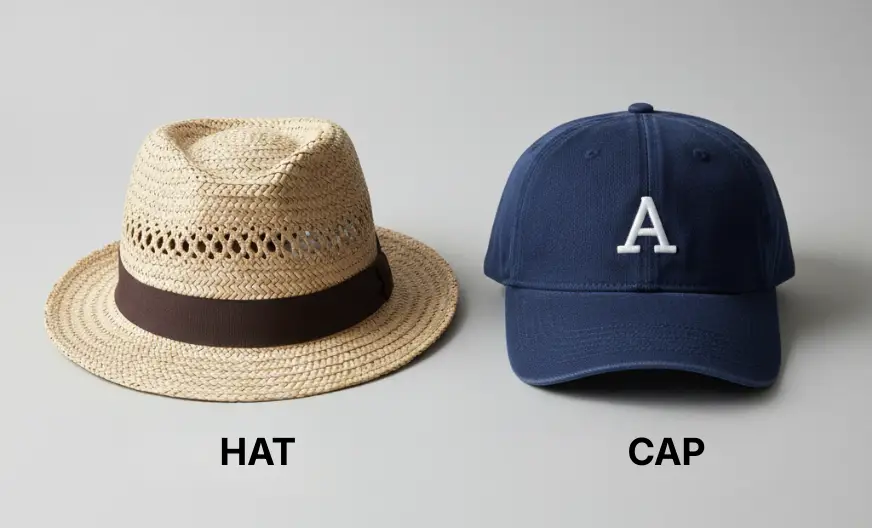
A hat is anything you wear on your head. People wear hats for the sun, warmth, work, or style.
A cap is a type of hat. It has a soft top and a stiff front called a bill. Caps are casual and used for sports, outdoor activities, or daily wear.
Simple way to remember: all caps are hats, but not all hats are caps. Fedoras, sun hats, or beanies are hats, but they are not caps. Caps always have that front piece to block the sun.
Pick a hat if you want more coverage or a formal style. Pick a cap if you want something simple for daily use.
Common Hat Buying Mistakes That Waste Money
A lot of people buy hats the wrong way. Some grab whatever looks nice and then regret it later. Others don’t check the fit and end up with a hat they never wear.
Buying cheap hats just because they are cheap is another mistake. They lose shape, fade, or fall apart quickly.
Some people buy hats because they are “trendy,” but never actually wear them. That’s wasted money.
Another big mistake is not thinking about what you actually do. A hat might look good, but if it doesn’t fit your day-to-day life, you’ll leave it in the closet.
And one more is ignoring proper care. Some hats need special handling, and if you don’t, they can get ruined fast. If you don’t want that to happen, we show exactly how to clean, dry, and store them in our hat care guide.
Is a Hat Worth It?
Hats are worth it. They keep you warm, block the sun, cover messy hair, hide a bald spot, and make things easier when you need them.
Which hat do you think you’ll try first, a cap, a beanie, or a wide-brim hat?
Or maybe you have another style you like that we didn’t mention.
Write your answer in the comments. We’re curious what you actually wear and what works for you.
If you’re not sure how to wear it so it looks right, check our guide on how to wear a hat and get it right the first time.